01 May 2026Your car puts up with a lot.
Daily commutes, highway miles, potholes, heat, and everything in
between. Most of the time, it just keeps going without complaints. But when
something starts to go wrong, it rarely fails all at once.
Instead, it drops hints.
A slight jerks in the steering wheel. A puddle in the driveway. A noise
you've never heard before. These aren't random quirks, they're your vehicle
trying to tell you something.
The problem is, it's easy to put off car service when life gets busy and
nothing feels "that bad yet." But small issues have a way of quietly
turning into expensive ones.
Knowing what to watch for can save you money, stress, and more
importantly, keep you safe on the road.
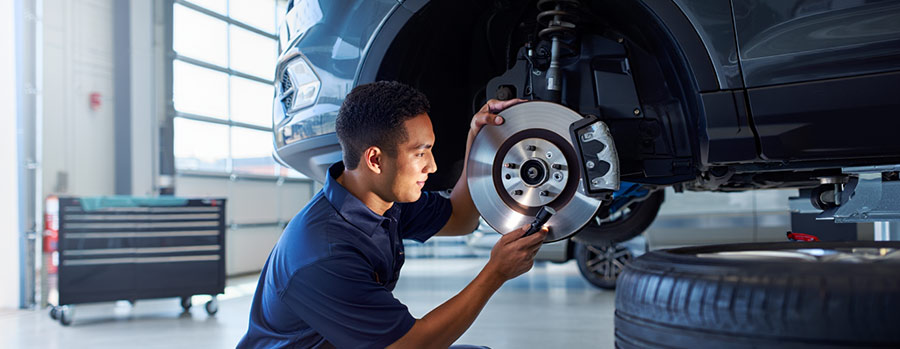
At Jarrett Scott Ford,
we believe that an informed driver is a safe driver. Ignoring small issues
today can lead to massive repair bills tomorrow. To help you stay ahead of the
curve, here are the most common signs your car needs servicing.
1. The
Dashboard Warning Lights
Your dashboard is your car's
primary way of communicating with you. While some lights are simple reminders
(like your low fuel icon), others are urgent warnings that require immediate
professional attention.
·
Check Engine Light: This is the most versatile light.
It could be triggered by something as minor as a loose gas cap or as serious as
a failing catalytic converter or a misfiring engine.
·
Brake Warning Light: If this stays on after you’ve
released the parking brake, it’s a critical safety
concern. You might be dangerously low on brake fluid, or there could be a
failure in the ABS (Anti-lock Braking System).
·
Oil Pressure Light: Never ignore this. It means
your engine isn't getting enough lubrication. Running an engine with low oil
pressure can lead to total internal failure within minutes.
·
Battery/Charging Alert: This indicates that the
electrical system is no longer being powered by the alternator. If this light
pops up, you are driving on "borrowed time" from the battery's
remaining charge.
At a professional service, technicians
use advanced diagnostic equipment to pinpoint the car’s issue, saving you time
and money on unnecessary guesswork.
2.
Steering Wheel Shaking or Vibrations
If your steering wheel feels
like it’s trying to vibrate out of your hands, or if the chassis feels like
it's "shuffling," your vehicle is out of balance.
·
Wheel Alignment & Balance: Over time, hitting potholes or
curbs in Plant City can knock your wheels out of alignment. If the steering
wheel shaking occurs only at specific high speeds (usually between 55–70 mph),
your tires likely need precision balancing.
·
Brake Issues: If the shaking happens specifically when you apply the
brakes, you likely have warped brake rotors. The pulsating feeling is the brake
pads struggling to grab an uneven surface.
·
Suspension and Steering Components: Worn-out
tie rods, ball joints, or bushings can create "play" in the steering
system, leading to a shaky or wandering sensation on the road.
3. The
Surprise Fluid Leaks
Your car relies on various
fluids to cool, lubricate, and power its complex systems. If you notice a
puddle in your driveway, the color and consistency can tell you a lot about the
health of your vehicle:
|
Fluid Color
|
Likely Identity
|
Potential Issue
|
|
Dark Brown/Black
|
Engine Oil
|
Worn gaskets, seals, or an improperly tightened oil
filter.
|
|
Bright Green/Orange/Pink
|
Coolant (Antifreeze)
|
A leak in the radiator, water pump, or a pressurized
hose.
|
|
Red/Dark Red
|
Transmission Fluid
|
A leak in the transmission lines or a failing seal.
|
|
Amber/Translucent
|
Brake Fluid
|
This indicates a leak in the master cylinder or brake
lines.
|
|
Clear/Water
|
Condensation
|
Usually just runoff from your A/C system. This is
perfectly normal!
|
4.
Starting Trouble and Electrical Gremlins
Modern vehicles are essentially
rolling computers. When the electrical foundation is weak, the whole car
suffers. Starting trouble usually boils down to three main culprits:
·
Weak Battery: If your engine cranks slowly or your interior lights dim
when you try to start the car, your battery is likely reaching the end of its
life. In the Florida heat, batteries typically last 3–5 years.
·
Alternator Failure: If your battery is relatively
new but keeps dying, your alternator might not be generating enough juice to
recharge the battery while you drive.
·
Corroded Terminals: Sometimes the battery is fine,
but acid buildup on the terminals prevents the electricity from flowing. Our
team can clean and protect these connections during routine service.
5.
Unusual Noises: The "Soundtrack" of Trouble
If your car starts making a
"soundtrack" for your drive, listen closely. These sounds are often
the first indicators of mechanical wear before a part fails completely.
·
Squealing or Chirping: High-pitched squealing during
startup or acceleration usually points to a worn-out serpentine belt. If it
happens while braking, it’s a "wear indicator" on your brake pads
telling you they are getting thin.
·
Grinding: This is a "metal-on-metal" sound. If it happens
when braking, your pads are completely gone, and you are damaging your rotors.
If it happens while moving and changes with speed, it could be a failing wheel
bearing.
·
Hissing: A hissing sound under the hood often indicates a vacuum
leak or a coolant leak spraying onto a hot engine component.
·
Knocking: A heavy, rhythmic knocking sound from deep within the
engine is a major red flag. This often indicates "rod knock," which
is a sign of severe engine wear.
6.
Decreased Fuel Efficiency & Performance

Have you noticed you’re
visiting the gas station more often than usual? A sudden drop in MPG is a
subtle sign that your car isn't running efficiently.
·
Oxygen Sensors & Spark Plugs: If your
spark plugs are fouled or your oxygen sensors are dirty, the engine can't burn
fuel efficiently, leading to "running rich" and wasting gasoline.
·
Air Filters: A clogged engine air filter is like trying to run a
marathon while breathing through a straw. It forces the engine to work harder
and consume more fuel.
·
Dragging Brakes: Occasionally, a brake caliper
can "stick," causing the brake to stay slightly applied even when
your foot is off the pedal. This creates immense friction and kills your fuel
economy.
7.
Soft or Spongy Brake Pedal
Your brakes should feel firm
and responsive. If you find that you have to push the pedal nearly to the floor
to stop, or if the pedal feels "squishy" like a sponge, you have air
in your brake lines or a failing master cylinder.
This is a critical safety issue
that requires an immediate tow to Jarrett Scott Ford.
Get Your Next Service Done at Plant
City
Cars are remarkably good at signaling when something's off, the trick is
learning to pay attention before a small warning becomes a breakdown on the
side of the road.
Whether it's a new noise, a
warning light you've been meaning to look into, or just a feeling that
something isn't quite right, trust your instincts. Getting it checked sooner
almost always beats waiting until later.
At Jarrett Scott Ford Service
Department, we combine technical expertise with trusted local service to keep
our community safely on the road. Located in Plant City, our team is committed
to delivering reliable, high-quality care for your vehicle, no matter what you
drive.
What’s the most recent "new noise”
your car has started making? Let us take a listen and help you get back on the
road with confidence