
Battery Maintenance: How to Clean Terminals and Signs to get Professional Help
While the strawberries flourish and thrive in the Florida sun, your vehicle’s battery is not finding the heat quite so fascinating.
In fact, it’s fighting for its
life from June through September.
Most drivers think of winter as
the ‘cold battery equals no start’ season, but the cold is not the root cause
of the "The car is not starting" predicament.
We’re in Central Florida! And heat is the real
silent culprit here. As always.
High temperatures accelerate
internal corrosion and cause the liquid electrolyte
inside your battery to evaporate. By the time that first cold snap hits 50
degrees in November, a heat-damaged battery simply doesn't have the
"juice" left to start the engine.
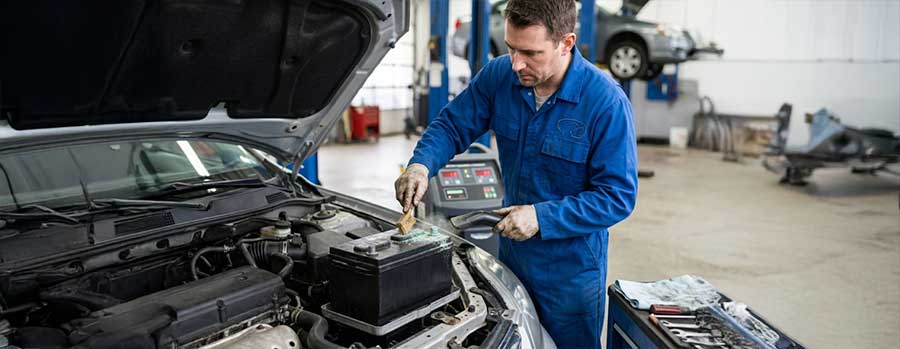
The good news? You don’t have
to be a technician to take basic care of your battery. Regular battery terminal
cleanings might just be your first line of defense against being stranded in
the Publix parking lot.
Here at Quick Lane at Jarrett
Scott Ford, we’re here to help through all the rough seasons Florida presents
to your vehicle. With a little proactive battery maintenance, you can keep your
car cranking reliably.
How
cleaning the battery terminals helps with start performance
As your battery operates, it naturally releases small
amounts of sulfuric acid gas. When these acidic vapors meet the metal terminals
in our high-humidity Plant City air, they react and create that white, ashy, or
bluish-green crust.
Left alone, this
"crust" acts like a clogged artery for your car’s electrical system.
It adds resistance, making your alternator work harder, and your starter
struggle to draw power.
Get rid of the clog, and your
battery will thank you for it.
Step-by-Step
DIY Battery Terminal Cleaning
What you’ll need:
·
Baking soda and water (mixed into a paste).
·
An old toothbrush or a wire battery brush.
·
A 10mm wrench.
·
Protective gloves and eyewear.
The Process:
Safety First: Ensure the engine is off. Always disconnect the Negative
(–) cable first. This prevents an accidental electrical short if your wrench
touches a metal part of the frame while you are loosening the bolt.
1. Scrub the Corrosion: Apply the baking soda paste to the terminals. You’ll notice it fizzing; this is the alkaline soda neutralizing the acidic corrosion. Scrub vigorously until the metal shines.
2. Inspect the Hardware: This is the most overlooked part of battery maintenance. Look at the cables. If the insulation is cracked or the copper wiring is frayed and green, you likely need cable replacements. Cleaning a terminal won't fix a broken wire.
3. Dry and Protect: Wipe everything dry with a clean rag. Apply a thin layer of petroleum jelly or terminal protector spray to the posts to lock out Florida's humidity.
4.
Reconnect: Attach
the Positive (+) cable first, then the Negative (–).
Other
Ways to Extend Your Battery Life
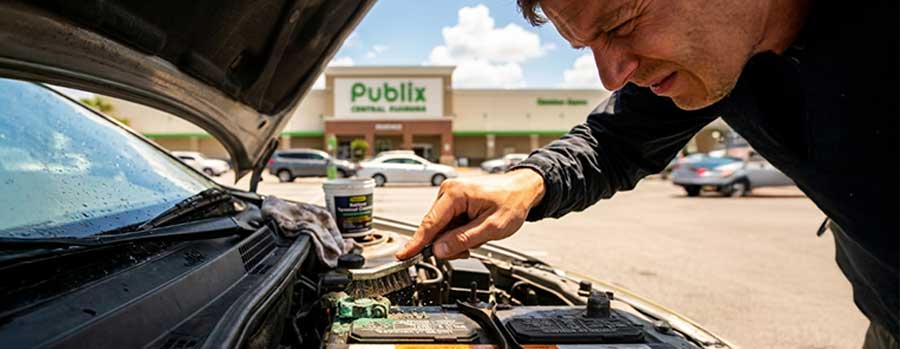
Cleaning terminals is great,
but it’s not the only way to play defense. You can't control the weather on
James L. Redman Pkwy, but you can control these factors:
· Avoid Short Trips: Your battery needs about 15–20 minutes of driving for the alternator to fully replenish the energy used to start the car. Constant 5-minute trips to the store will eventually leave the battery undercharged and shorten its life.
· Keep it Secure: Ensure the battery hold-down bracket is snug. Vibration is a leading cause of internal battery plate failure. If the battery "wiggles," it’s dying faster.
· Clean Case: Use a damp cloth to wipe dirt off the top of the battery case. Dirt can actually conduct a very small amount of electricity, creating a "parasitic drain" that slowly empties your battery overnight.
· Park in the Shade: Whenever possible, keep the hood out of direct sunlight to lower the under-hood temperature.
·
Unplug Accessories: Don't leave phone chargers, or
GPS units plugged into "always-on" ports while the engine is off.
When
to See a Professional for Further Diagnosis
Sometimes, a DIY scrub isn't
enough. Your battery is a chemical storage device with a finite lifespan, usually
3 to 5 years in Florida. If you notice any of the following, it might be time
for professional battery maintenance or battery replacement services:
1. The "Slow Crank"
If the engine sounds like it’s
laboring to turn over and start, but it does eventually, your battery's Cold Cranking Amps (CCA) have likely
dropped.
CCA is a rating used to define
a battery's ability to start an engine in cold
temperatures. In Florida, the heat affects the internal battery cells, resulting
in the battery not dumping enough power into the starter for a smooth start. If
it feels sluggish, the battery is no longer holding a full charge.
2. Physical Deformities
Pop the hood. If the battery
case looks bloated, swollen, or misshapen, heat has caused the internal
components to expand. This is a ticking time bomb. You should replace the
battery immediately before it leaks acid or bursts.
3. Recurring Corrosion
If you perform battery terminal
cleanings and the crust returns within a week or two, your battery may be
leaking acidic vapors from the seals around the posts. This indicates the
battery is venting excessively and is failing internally.
4. Frequent Electrical Issues
Modern cars are literally
"computers on wheels." If you see flickering dashboard lights, weird
radio resets, or "Service AdvanceTrac" warnings, it can be a signal
of low voltage from a failing battery, and the system not
getting enough power to function properly.
5. Age
Check the sticker on the side
of your battery. If it’s over 36 months old, it is in the "danger
zone" for Florida drivers. Don't wait for it to fail at 5:00 PM on a
Friday.
Why
Choose Quick Lane at Jarrett Scott Ford?
When it’s time to change your
car battery, where you go matters. Big-box retailers might sell you a
"universal" battery, but our battery replacement services ensure you
get a Motorcraft® battery specifically engineered for your car’s exact electrical
load and reserve capacity requirements.
Plus, we don't just "swap
the box." Every time you visit us to replace the battery, we test the
entire charging system, including the alternator and starter. We want to ensure
that a failing alternator isn't going to kill your brand-new battery next week.
So, is your vehicle starting a little slower lately? Come see us at Jarrett Scott Ford in Plant City. We’ll get the job done at your convenience!