
Identify Vehicle Fluid Leaks: Causes, Warning Signs, and Repair Solutions
Modern vehicles rely on a carefully balanced system of essential fluids to operate safely and efficiently. From engine oil and coolant to transmission and brake fluid, each one plays a critical role in protecting performance and preventing costly damage.
When a leak appears, it’s not just a stain on your driveway, it's an early warning system.
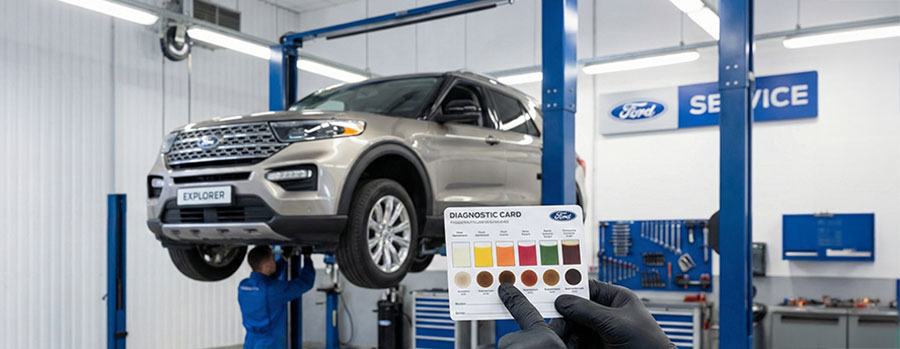
At Quick Lane® at Jarrett Scott
Ford, we believe that knowledge is the best tool in your trunk. While a puddle
might look like a disaster, it’s actually a communication tool. Your vehicle is
literally "bleeding" information about
its internal health.
To help you navigate these
messy mysteries, we’ve put together a guide to diagnosing car fluid leaks,
identifying leak color types and what they indicate, and understanding the
vital fluid services that keep your vehicle on the road.
The First Step: The "White Cardboard" Test
Before we dive into the
specifics, let’s talk about how to accurately identify what you’re looking at.
Driveways are often stained with years of old spills, and dark asphalt can make
every fluid look like black oil.
If you suspect a leak, the best
DIY diagnostic tool is a simple piece of white cardboard or any material which
will help you identify the color correctly. Slide it under your vehicle
overnight, positioned directly beneath the engine and transmission area.
In the morning, you’ll have a clear sample of
the fluid’s true color, consistency, and smell. This information is gold for
our technicians at Quick Lane, as it helps us narrow down the source of the
problem before we even lift the hood.
Leak Color Type and What It Indicates
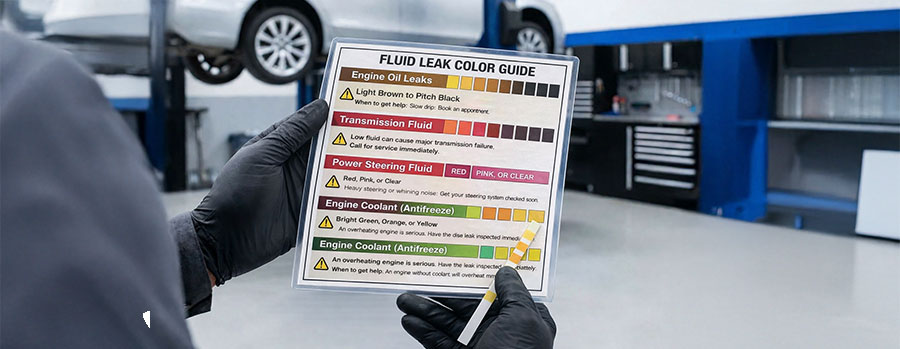
Your car relies on a variety of
fluids to lubricate, cool, and provide hydraulic pressure. Each one is dyed a
specific color to help with identification. Here is your cheat sheet for the fluid
under your car:
1.
Light Brown to Pitch Black: Engine Oil Leaks
Oil leaks are the most common
automotive leaks. Engine oil starts as a translucent,
honey-colored amber. Over time, as it circulates through your engine, it picks
up carbon deposits and heat, eventually turning dark brown or black.
·
Consistency: Slick, thick, and oily.
·
Smell: Smells like burnt rubber or heavy chemicals.
·
Common Locations: Usually found directly under
the front-center of the car.
·
The Cause: Often a degraded oil pan gasket, a worn valve cover
gasket, or a loose oil filter.
·
When to get help: If it’s a slow drip, you have
time to book an appointment. If it’s a steady stream, don’t start the engine, call
for a tow.
2.
Bright Red to Dark Burgundy: Transmission Fluid
Transmission fluid is
specifically designed to be bright red, so you don't mistake it for anything
else. This fluid is the lifeblood of your vehicle’s shifting capabilities,
acting as both a lubricant and a hydraulic fluid.
·
Consistency: Oily but thinner than engine oil.
·
Smell: Has a distinctive, sharp, tart smell (if it smells
"burnt," your transmission may be overheating).
·
Common Locations: Usually found toward the
middle of the vehicle.
·
The Cause: Worn seals or cracked transmission fluid line.
·
When to get help: This is a high-priority issue.
Low transmission fluid can lead to "slipping" gears and eventual
total transmission failure, which is a major repair.
3.
Red, Pink, or Clear: Power Steering Fluid
Modern Ford vehicles use
specialized power steering fluid to help you turn the wheel with ease. While it
can look similar to transmission fluid, its location and behavior are
different.
·
Consistency: Thin and oily.
·
Smell: Similar to a mild oily scent, but less pungent than
transmission fluid.
·
Common Locations: Toward the front-left or
front-right of the engine bay.
·
The Cause: A leak in the power steering pump, a cracked hose, or a
failing steering rack.
·
When to get help: If your steering feels
"heavy" or you hear a whining sound when turning the wheel, your
fluid levels are likely low.
4.
Bright Green, Orange, or Yellow: Engine Coolant (Antifreeze)
Coolant is perhaps the easiest
to spot because of its neon-like colors. It is vital for regulating your
engine’s temperature.
·
Consistency: Slimy and watery, not oily.
·
Smell: Notably sweet (this is dangerous for pets, as they are
attracted to the smell, but the fluid is toxic).
·
The Cause: A leaking radiator, a burst hose, or a failing water
pump.
·
When to get help: Do not ignore this. An engine
without coolant will overheat in minutes, leading to warped cylinder heads and
expensive engine damage.
5.
Clear and Watery: A/C Condensation
If the fluid is clear,
odorless, and looks exactly like water, it’s probably just your air conditioner
doing its job. On humid Florida days, your A/C system pulls moisture from the
air, which then drips out of a drain tube. This is 100% normal.
Why Professional Fluid Services are Essential
Leaks are symptoms of a deeper
problem. Professionals use specialized tools, such as UV dyes and pressure
testers, to find exactly where the fluid is escaping. A small oil leak from a
filter is a $20 fix, a leak from a rear main seal
is much more involved. We make sure you aren't wasting money on "quick
fixes" that don't last.
The
Right Fluid for the Right Ford
Using the wrong type of
transmission fluid or a generic power steering fluid can actually damage the
seals and internal components of your specific Ford model. We use Motorcraft®
fluids, which are engineered specifically for your vehicle’s tolerances and
performance needs.
The "Works®" Package: The Ultimate Preventive Measure
The best way to handle oil
leaks or fluid issues is to catch them before they even hit your driveway. This
is where The Works® at Quick Lane comes in. When you bring your vehicle to us
for this signature service, we perform a comprehensive "health check"
that includes:
·
Synthetic Blend Oil Change: To keep your engine lubricated
and clean.
·
Pressure Check: We inspect your hoses and
belts for signs of cracking or weeping.
·
Fluid Top-Off: We check your power steering
fluid, coolant, and brake fluid levels.
·
Multi-Point Inspection: A technician walks around and
under your car to look for the early signs of leaks that haven't reached the
ground yet.
|
Service Feature
|
Benefit to You
|
|
Comprehensive Inspection
|
Catches small leaks before they become big repairs.
|
|
Expert Technicians
|
Ford-trained pros who know exactly what to look for.
|
|
Quality Parts
|
We use Motorcraft® fluids and filters for a perfect
fit.
|
Don't Let a Leak Leave You Stranded
Ignoring oil leaks or a drop in
transmission fluid is a gamble that rarely pays off. Over time, low fluid
levels cause friction, friction causes heat, and heat kills engines and
transmissions.
At Jarrett Scott Ford Quick
Lane, we pride ourselves on being the fast, convenient, and professional
solution for the Plant City community. We understand that your time is
valuable, which is why we offer expert diagnosing car fluid leaks and repair
services without the need for a long-term service appointment.
If you see a spot on your driveway, don't wait for a warning light. Bring it to the experts who know your Ford inside and out. We’ll help you identify the issue and get you back on the road with confidence.