
Brake Fluid Service Guide: Identifying Warning Signs, Leaks, and Expert Solutions
Maintaining a vehicle in the high-humidity environment of Central Florida requires more than just an occasional wash.
It
might be just another day, navigating the heavy traffic on James L. Redman Parkway or you might be heading to the Strawberry
Festival Grounds, but your ability to stop on a dime safely depends entirely on
the condition of your braking system.
While
many drivers prioritize oil changes and tire rotations, brake fluid is often
the most neglected component on the service checklist.
At
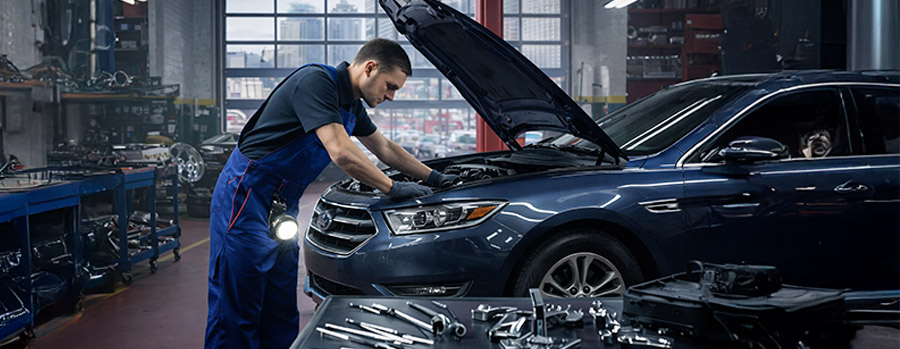
Quick Lane at Jarrett Scott, we service all makes and models. We frequently see
vehicles where braking performance has degraded because the fluid has reached
the end of its functional life. Understanding how this system works and why it
fails can prevent a minor maintenance task from turning into a major safety
hazard.
To
understand why your brakes might feel "spongy" on a humid Florida
afternoon, let's first have a look at the science happening inside your brake
lines.
How Does a Hydraulic Brake System Function
Brake
fluid is an incompressible liquid that acts as the "messenger" for
your stopping power. When you press the pedal, that force is transferred
directly through the lines to the brake calipers and pads. Because most modern
vehicles utilize a hydraulic system, the fluid must maintain its physical
properties under extreme pressure and intense heat.
Most
vehicles require DOT 3 or DOT 4 fluid. These are glycol-based liquids
engineered to operate at temperatures exceeding 400°F. However, for the system
to work, the fluid must remain a pure liquid. If the fluid is compromised, its
boiling point drops, and its ability to transfer pressure diminishes, leading
to a dangerous delay in stopping time.
Signs You Need to Change Your Brake Fluid
Because
your brakes are your primary safety feature, your car will usually show signs
to you when the fluid is failing. Look out for these specific signs:
1. A Spongy or Soft Pedal: If the pedal feels like a marshmallow or travels further toward the floor than usual, there is likely air or moisture in the lines.
2.
The Dashboard Warning Light: An illuminated ABS or Brake light often triggers when the
system detects a drop in hydraulic pressure or low fluid levels.
3. Decreased Stopping Power: If you find yourself needing more distance to come to a complete stop, your fluid may be failing to transmit full pressure to the calipers.
4. Discolored Fluid: Fresh brake fluid is clear to light amber. If you peek into the reservoir and see dark, "iced coffee" colored liquid, it is saturated with moisture and debris.
5.
A Burning Smell: After heavy braking, a sharp, chemical odor can indicate that
your old, moisture-heavy fluid has reached its boiling point.
How Does Brake Fluid Degrade Over Time
Braking
inconsistencies are rarely a one-off glitch. They are the measurable result of
fluid degradation, where environmental moisture and heat have physically
altered the system's hydraulic properties.
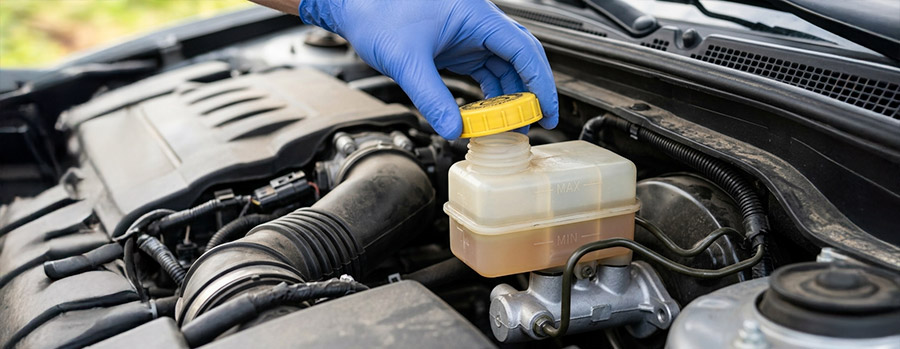
Brake
Fluid Moisture Absorption and Heat
The
primary reason fluid degrades is its hygroscopic nature. It is designed to
attract and absorb water from the atmosphere. In a humid climate like Plant
City, this process accelerates. Moisture enters the system through microscopic
pores in rubber hoses or through the reservoir cap during routine checks.
As
water content increases, the "wet" boiling point of the fluid drops.
Under the stress of stop-and-go traffic, that moisture turns into steam. This
creates a "vapor lock," where the hydraulic system fails because it
is fighting against compressible gas bubbles rather than solid liquid.
Air
in the Brake Lines
Unlike
liquid, air is highly compressible. When air enters the system, either through
a leak or as a byproduct of boiling fluid, your pedal force is wasted on
squeezing air bubbles instead of pushing the brake pads against the rotors.
How to Recognize a Brake Fluid Leak
A brake fluid leak is a non-negotiable
safety failure. Because the braking system is a closed loop, the fluid level
should not drop significantly between service intervals. If it does, the fluid
is escaping through a worn seal, a rusted line, or a cracked hose.
1.
The Puddle (External Leak)
Check for an oily, slippery liquid
under the vehicle, typically near the inside of the wheels or directly under
the engine bay (where the master cylinder sits).
·
Color: Fresh fluid is clear to light amber; old fluid is dark brown.
·
Odor: It carries a distinct, pungent chemical smell—some describe it as
"fishy" or "acrid."
·
Texture: Unlike engine oil, which is thick, brake fluid feels slightly more
watery but very slippery to the touch.
2.
Visible Internal Moisture
During a professional inspection, a
technician looks for "weeping." This is when fluid hasn't hit the
ground yet but is coating the brake calipers, wheel cylinders, or rubber hoses.
This moisture attracts road dust and grime, creating a thick, dark
"sludge" around the leak site. Catching this "weeping" seal
early prevents a sudden loss of pressure on the road.
3.
The Dashboard Warning
Your car is equipped with a float
switch inside the brake fluid reservoir. If the fluid level drops below a safe
threshold, even if you don't see a puddle, the "BRAKE" or
"ABS" light will illuminate your dashboard. This is often the first
electronic sign that the system's hydraulic integrity has been compromised.
4.
The Low Reservoir
Sometimes a leak is internal. If the
seals inside the Master Cylinder fail, fluid can leak into the brake booster.
You won't see a puddle on the ground, but you will notice the fluid level in
the reservoir dropping consistently. If you find yourself "topping
off" the fluid more than once a year, you have a leak that needs immediate
professional attention.
Distinguishing Fluid Issues
from Hardware Failure
While
a soft pedal often points to fluid, mechanical issues can mimic these symptoms.
For example, in vehicles with rear drum brakes, misaligned or worn brake shoes
can cause a "low" pedal feel. If the automatic adjusters are seized,
the wheel cylinder must travel further to make contact, creating a delay in
your braking response.
We
use specific "pedal tests" to diagnose the root cause:
The
Sink Test: If the pedal slowly sinks while
holding a steady stop, the issue is likely a hydraulic failure in the Master
Cylinder.
The
Pump Test: If "pumping" the
brakes makes the pedal firm, the issue is often mechanical or indicates air in
the lines.
Vibration: If the pedal pulses against your foot, the problem is usually
warped rotors or hardware wear rather than the fluid itself.
At
Quick Lane at Jarrett Scott, we distinguish between these issues by performing
a full system health check. We ensure that your hydraulic "liquid
gold" and the mechanical hardware, from the calipers to the drum springs,
are in perfect synchronization.
The Professional Brake Fluid Flush vs. Topping Off
Many
owners make the mistake of simply adding new fluid to the reservoir. This is an
ineffective "band-aid" solution. Adding clean fluid to a
moisture-saturated system is like adding clean water to a muddy bucket, it doesn't fix the underlying contamination
trapped deep in your brake lines.
A
professional Brake Fluid Exchange involves:
·
Pressure Bleeding: Using specialized equipment to force fresh fluid through the
entire network.
·
Sequential Flushing: Bleeding each wheel individually to ensure every air bubble and
drop of moisture is removed.
·
Master Cylinder Purge: Removing settled sludge from the reservoir to prevent it from
re-entering the system.
Take Care of Your Brakes!
To
maintain optimal stopping power, we recommend a full brake fluid exchange every
two years or 30,000 miles.
If
your pedal feels even slightly different than it used to, visit Quick Lane at
Jarrett Scott. We’ll perform a moisture-content test to ensure your vehicle is
ready for the road.
So, don't wait for the spongy brakes. Schedule your brake service in Plant City today.