
Why Is Your Ford Losing Power? Common Causes of Poor Acceleration
Your Ford should know the difference between a leisurely Sunday drive through Plant City and the moment you need to merge onto I-4. If it suddenly seems to have forgotten how to accelerate, that is a little harder to shrug off.
Maybe your truck feels sluggish heading
up a hill. Maybe your SUV hesitates when you press the accelerator on US-92. Or
perhaps the engine revs, but your Ford just doesn't seem interested in going
anywhere quickly.

At Jarrett Scott Ford, we strive to make
service easy and effortless. A sudden or noticeable loss of power can be caused
by several different problems. Some may be relatively simple maintenance
issues, while others can involve the fuel system, ignition, transmission,
exhaust, or engine electronics.
Understanding the possible causes can help you
know when it is time to schedule professional Ford engine diagnostics.
What Does It Mean When a Ford Loses Power?
Poor acceleration does not always feel
the same from one vehicle to another. You might notice that your Ford takes
longer than usual to pick up speed, hesitates when you step on the accelerator,
or struggles more than normal when climbing a hill.
For Plant City drivers, these symptoms
can become especially noticeable during highway merging or stop-and-go traffic.
A vehicle that feels fine cruising at a steady speed may reveal a problem when
the engine suddenly needs to produce more power.
Here's a quick look at some common
symptoms and what they may point toward:
|
What You're Experiencing
|
Possible Causes
|
|
Sluggish acceleration
|
Air, fuel, ignition, or throttle issues
|
|
Engine hesitation
|
Sensor, fuel, or ignition problems
|
|
Engine revs but vehicle doesn't accelerate normally
|
Transmission concerns
|
|
Loss of power at higher speeds
|
Fuel delivery or exhaust restriction
|
|
Rough running with power loss
|
Misfire or ignition problem
|
|
Power loss with a check engine light
|
Engine or emissions-related fault
|
These symptoms are clues, not a
diagnosis. Several different problems can produce similar sensations, which is
why proper testing matters.
1. Your Engine May Not Be Getting Enough Air
Your Ford's engine needs the right
balance of air and fuel to operate properly. If airflow becomes restricted, the
engine may not perform as it should.
One possible culprit is a dirty or
heavily restricted engine air filter. Over time, dirt and debris can limit the
amount of air available to the engine. You may notice sluggish acceleration or
reduced overall responsiveness.
Common signs of an airflow problem may
include:
·
Sluggish acceleration,
especially when climbing hills or merging onto I-4
·
Reduced throttle response
or an engine that feels less responsive than usual
Fortunately, an air filter is relatively
straightforward to inspect. But if replacing it does not solve the problem,
there may be something else affecting airflow or engine operation.
2. A Fuel System Problem Could Be Holding Your Ford Back
Engines need a consistent supply of fuel
at the correct pressure. When something interferes with fuel delivery,
acceleration can suffer.
A weak fuel pump, restricted filter where
applicable, fuel injector problem, or fuel-pressure issue can all contribute to
poor engine performance.
You may notice fuel-related performance
problems when:
·
Your Ford hesitates or
loses power while accelerating
·
The vehicle struggles
more under load, such as when merging onto I-4 or driving uphill
The problem may be particularly
noticeable when your Ford is under load. For example, you might find that it
struggles more when accelerating onto I-4 than it does while cruising around
Plant City.
That difference can provide a useful clue
to a technician, but additional testing is generally needed to determine
exactly where the problem originates.
3. Worn Spark Plugs Can Affect Acceleration
Think of your engine as a carefully timed
series of small explosions. If the ignition system isn't doing its job
correctly, your Ford isn't going to deliver the performance you expect.
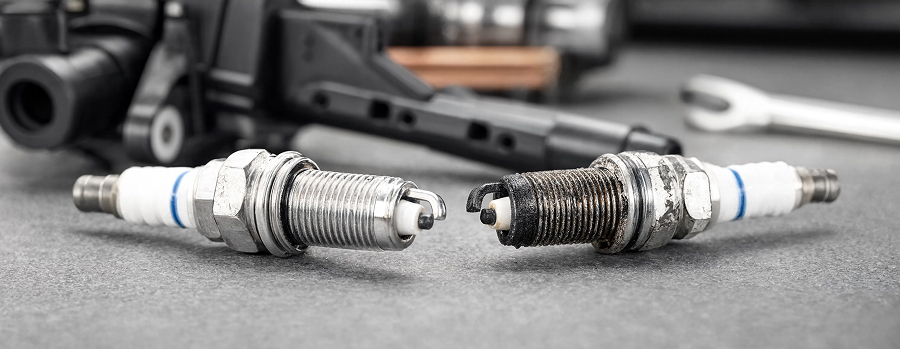
Worn spark plugs or faulty ignition
components can cause an engine misfire, which may feel like hesitation,
shaking, or a noticeable lack of power.
You might also notice:
·
Rough idling or shaking
while stopped
·
Reduced fuel economy or a
check engine light
Regular maintenance helps catch worn
ignition components before they turn into more noticeable Ford engine
performance problems. If your Ford is already running poorly, however,
replacing spark plugs without determining the actual cause may not solve the
problem.
4. An Engine Sensor Could Be Sending the Wrong Information
Modern Ford vehicles rely on sensors to
constantly monitor what is happening inside the engine. The vehicle's computer
uses this information to make adjustments that help the engine run efficiently.
When a sensor isn't working correctly,
the information reaching the engine computer may be inaccurate. Problems
involving components such as the mass airflow sensor or throttle-position
sensor can contribute to hesitation, poor acceleration, rough running, or
reduced performance.
A sensor-related issue may show up as:
·
Hesitation when you press
the accelerator
·
Rough running, reduced
performance, or an illuminated check engine light
This is one area where professional Ford
engine diagnostics can be particularly helpful. A diagnostic trouble code
may point toward a particular system, but the code does not necessarily mean
that the component itself is the problem. Further testing can help determine
what is actually happening.
5. Your Exhaust System Could Be Restricting Performance
Your engine needs to breathe in—and
breathe out.
If the exhaust system becomes restricted,
exhaust gases may not be able to leave the engine efficiently. A restricted
catalytic converter is one potential cause of significant power loss.
You may notice:
·
Increasingly sluggish
acceleration as engine speed rises
·
More severe power loss
when climbing hills or asking the engine to work harder
The symptoms can become more obvious when
you ask the engine to work harder. Your Ford may feel increasingly sluggish
during acceleration or when operating at higher engine speeds.
Because exhaust problems can have several
potential causes, a proper inspection is important before replacing expensive
components.
6. The Transmission May Be the Real Culprit
Not every acceleration problem is an
engine problem.
Your Ford's transmission is responsible
for transferring engine power to the wheels. If it is slipping, shifting
improperly, or experiencing another mechanical or electronic issue, the vehicle
may feel slow even when the engine itself is running normally.
One particularly useful clue is what
happens to the engine RPM.
Transmission-related acceleration
problems may involve:
·
Engine RPM rising without
a matching increase in vehicle speed
·
Delayed, harsh, or
inconsistent gear changes
If you press the accelerator and the
engine revs noticeably higher but your Ford doesn't accelerate proportionally,
the transmission may deserve closer attention.
That is different from an engine that
struggles to build RPM in the first place. The distinction may seem small from
behind the wheel, but it can help a technician narrow down the source of the
problem.
7. Throttle Problems Can Cause Hesitation
The throttle system controls how much air
enters the engine and plays an important role in how your Ford responds when
you press the accelerator.
A dirty throttle body or an issue with
the electronic throttle system can interfere with that response. In some
situations, the vehicle may even reduce engine power after detecting a problem
with the throttle or another critical system.
Possible warning signs include:
·
A noticeable delay when
pressing the accelerator
·
A sudden reduction in
power or a warning message on the dashboard
If your Ford suddenly feels dramatically
less responsive and a warning message appears on the dashboard, don't assume it
will simply correct itself.
Getting to the Bottom of Ford Engine Performance Problems
When your Ford isn't accelerating the way
it used to, the biggest mistake is assuming there is only one possible cause.
Poor acceleration can stem from something
as straightforward as restricted airflow or worn ignition components. It can
also involve fuel delivery, engine sensors, throttle operation, the exhaust
system, or the transmission.
The right repair starts with the right
diagnosis.
At Jarrett Scott Ford, professional Ford
repair service and diagnostic testing can help determine why your vehicle
is losing power and what needs to be done to restore proper performance.
Whether you're commuting around Plant City, heading toward Tampa, or merging onto I-4, your Ford should give you the confidence to accelerate when you need it. If it doesn't, don't ignore the warning signs. Schedule Ford engine diagnostics and get the problem properly identified before a small performance issue becomes a much bigger inconvenience.