
Ford F-150 Brake Service: Pads, Rotors, Calipers and More
Your Ford F-150 is built to carry heavy loads, tow trailers and handle the demands of everyday driving. But no matter how much capability your truck has, it all comes back to one basic requirement: being able to stop safely and predictably.
Every time you slow
down in Plant City traffic, tow a trailer through Central Florida or bring
a loaded F-150 to a stop, the braking system is doing its job.
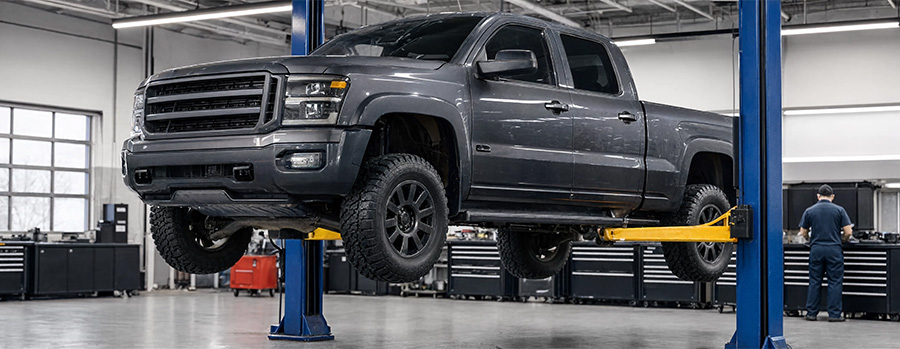
Over time, that repeated friction and
heat causes components to wear. Brake pads become thinner, rotors can develop
wear, and calipers and other hardware can eventually need attention.
At Jarrett Scott Ford, we make F-150
service straightforward for drivers in Plant City and the surrounding Tampa Bay
area. Here's a closer look at the major parts of your F-150's braking system,
the signs of wear to watch for and what to know before scheduling brake
service.
Brake Pads: The Component That Typically Wears First
Brake pads are designed to wear down as
you drive. Every time you apply the brakes, the pads press against the rotors
and generate friction. That friction slows the truck, but it also gradually
reduces the amount of usable pad material.
How quickly that happens depends on how
your F-150 is driven.
Frequent stop-and-go traffic, towing,
hauling heavy loads, steep roads and repeated hard braking can all increase
brake wear. An F-150 used primarily for highway driving may experience very
different brake wear from one used every day for work and towing.
During a brake inspection, a technician
can measure the remaining pad material and look for uneven wear. Uneven wear
can be particularly useful as a diagnostic clue because it may indicate that
another component, such as a caliper, isn't operating correctly.
Rotors: The Other Half of the Friction Surface
Brake pads don't work alone. They press
against the rotors to create the friction that slows your F-150.
As the truck accumulates miles, rotors
can develop scoring, corrosion, heat-related damage or changes in thickness.
Their condition can affect how smoothly and consistently the brakes operate.
One common symptom of a rotor-related
problem is vibration when braking. You may feel that vibration through the
steering wheel, brake pedal or the truck itself.
That doesn't automatically mean the
rotors need to be replaced. A technician can inspect the rotors and determine
whether they remain within the appropriate specifications or whether
replacement is necessary.
This distinction matters when you're
considering F-150 brakes and rotors. Brake pads and rotors often work
together, but they don't necessarily need to be replaced together every time.
The right approach is to inspect both
components and replace what's actually worn or damaged.
Calipers and Hardware: The Components That Keep Everything
Working Together
The calipers are responsible for applying
pressure to the brake pads. When you press the brake pedal, the caliper helps
push the pads against the rotor, creating the friction needed to slow the
truck.
A caliper that sticks, seizes or
otherwise malfunctions can create problems beyond the caliper itself.
You might notice:
·
Uneven brake-pad wear
·
The truck pulling to one
side
·
Excessive heat around one
wheel
·
A burning smell
·
Unusual brake noise
·
Reduced braking
performance
If one brake is working harder than
another, simply replacing the pads may not resolve the underlying issue.
F-150 brake configurations can also vary
significantly based on model year, trim, drivetrain and equipment. For example,
an F-150 FX2 front brake pads, rotors and calipers setup has specific
component requirements that should be verified for the individual truck.
Using the VIN and applicable factory
specifications helps ensure the correct components and service procedures are
used.
Recognizing the Signs That Your F-150 Needs Brake Service
Brake wear doesn't always begin with a
dramatic failure. Your truck may give you several smaller indications that the
braking system needs attention.
Pay attention to:
·
Squealing or grinding
when braking
·
A soft or spongy brake
pedal
·
Increased stopping
distance
·
Vibration while braking
·
The truck pulling to one
side
·
Uneven brake-pad wear
·
Burning smells after
heavy braking
·
Brake warning lights or
messages
These symptoms don't necessarily point to
one specific component.
For example, vibration could involve the
rotors or another part of the vehicle. Pulling could be related to uneven brake
wear or a caliper. A soft pedal could have several possible causes.
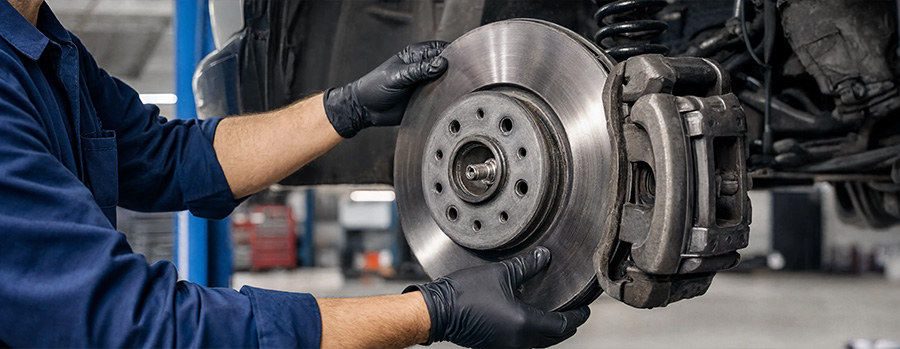
That's why diagnosis matters.
Instead of assuming you need pads or
rotors based on one symptom, a brake inspection can determine what is actually
happening and which components require attention.
Electronic Brake Systems and F-150 Brake Service Mode
Modern F-150 models can include
electronic systems that require different service procedures from older,
mechanically operated systems.
One example is the electronic parking
brake found on appropriately equipped models. When certain rear-brake repairs
are performed, the system may need to be placed into a specific F-150 brake
service mode before work begins.
The exact procedure varies by model year
and configuration.
This is important because electronic
parking-brake components aren't serviced in exactly the same way as traditional
mechanical systems. Attempting to force components or bypass the appropriate
service procedure can cause unnecessary damage.
When servicing an F-150 equipped with
electronic brake systems, technicians need to follow the appropriate procedure
for that specific vehicle.
What a "Check Brake System" Warning Means
A "Check Brake System"message is different from a routine maintenance reminder.
The exact cause can vary depending on the
F-150's model year and equipment. The warning could be related to the braking
system, brake fluid, sensors, electronic components or another system requiring
diagnosis.
The important thing is to take the
warning seriously rather than assuming it will disappear on its own.
Pay attention to how the truck feels when
braking. If the pedal feels different, stopping performance has decreased or
the truck doesn't feel safe to drive, have the vehicle evaluated as soon as
possible.
A proper diagnostic inspection can
determine why the warning appeared and whether immediate repair is required.
Don't Forget the Brakes on the Trailer You're Towing
For F-150 owners who tow, the truck's
braking system is only part of the equation.
If your trailer has electric brakes, the F-150
trailer brake controller helps manage braking input to the trailer. The
goal is for the truck and trailer to work together as you slow down.
This becomes particularly important when
you're towing heavier loads.
Plant City drivers may use their F-150s
to tow boats, campers, equipment and work trailers. If you notice inconsistent
trailer braking, unusual braking response or problems with the trailer brake
controller, the towing system should be inspected.
Remember that trailer brakes and the
F-150's own braking system are separate. Maintaining one doesn't eliminate the
need to inspect the other.
Brake Lights Are Part of the Safety Picture
Not every brake-related component
actually helps stop the truck.
Your F-150 3rd brake light, or
center high-mounted stop lamp, is positioned higher on the truck to make your
braking more visible to drivers behind you.
If the light isn't functioning properly,
it should be addressed.
Depending on the F-150's configuration,
the problem could involve the bulb or LED assembly, wiring, fuse, switch or
another electrical component.
It may not affect the truck's mechanical
braking performance, but it still plays an important role in communicating with
other drivers.
Get F-150 Brake Service in Plant City at Jarrett Scott Ford
Your F-150 may be a work truck, a towing
vehicle, a family vehicle or your everyday transportation. Whatever role it
plays, reliable braking is essential.
From worn F-150 brake pads and
damaged rotors to sticking calipers, electronic brake-system warnings and
trailer-brake concerns, the right repair starts with understanding what's
actually causing the problem.
At Jarrett Scott Ford, F-150 owners in
Plant City and surrounding Central Florida communities can have their trucks
inspected and serviced by a team familiar with Ford vehicles and their specific
service requirements.
Whether you've noticed a change in braking performance or simply want to have your brakes inspected during routine maintenance, addressing the system before a small issue becomes a larger one can help keep your F-150 ready for the work, towing and everyday driving ahead.