
Transmission Troubles? When to Schedule a Ford Transmission Repair
29 October 2025
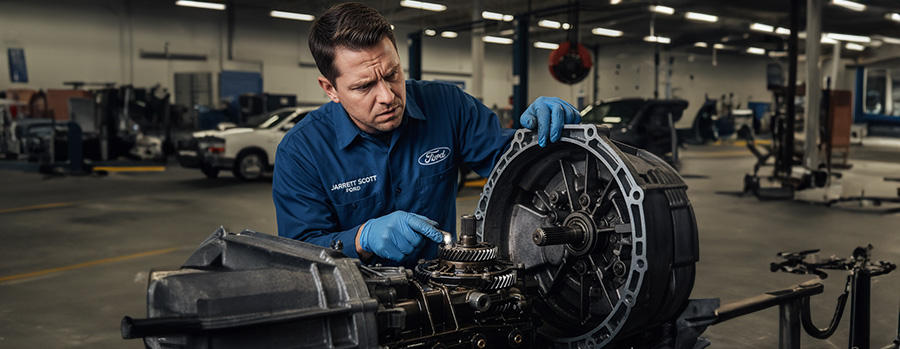

Were you aware that in Florida’s warm and humid climate, transmission fluid degrades twice as fast compared to states with moderate climate, causing overheating and component damage much faster than usual?
For drivers in and around Plant City, recognizing transmission issues early and knowing when to bring your car in for professionals saves you thousands and extends vehicle life.
Infact studies show that timely maintenance, such as transmission fluid change every 30,000 to 60,000 miles, keeps lifetime transmission care costs between $800 and $1,200 by avoiding major repairs. Neglecting services can lead to expensive failures costing north of $4,000.
This guide from Jarrett Scott Ford breaks down how your transmission works and when it’s time to take action for repairs or service for a smoother transmission experience.
Common Signs You Need Transmission Service For Your Car
Here are some of the most common indicators that it’s time to schedule a transmission repair for your car.
1. Slipping Gears
Common in automatic transmissions, where the transmission shifts unexpectedly or struggles to stay in gear. It can also happen in manual transmissions due to worn clutch components but is more noticeable and frequent in automatics.
If your transmission "slips”, meaning it changes gears unexpectedly or feels like it’s struggling to stay in gear, it’s a red flag. You might notice the engine revving high without a corresponding increase in speed.
This usually indicates worn clutch components or low transmission fluid levels. It’s not something you should ignore, driving with slipping gears can cause internal damage that worsens quickly.
2. Delayed or Rough Shifting
Primarily an issue in automatic transmissions because gear shifts are controlled hydraulically or electronically. Manual transmissions may feel rough or grind when shifting due to worn clutch parts or gear synchronizers, while delayed or sluggish shifting is usually a sign of trouble in automatic transmissions.
A properly functioning transmission should shift gears seamlessly. If you notice a delay when your vehicle moves from "Park” to "Drive,” or if shifts feel harsh, jerky, or accompanied by a clunking sound, your transmission fluid could be low, dirty, or leaking.
At this stage, it’s best to bring your vehicle to a professional for a transmission fault service before the problem escalates.
3. Grinding, Whining, or Clunking Noises
Grinding noise commonly occurs in manual transmissions when gears fail, or clutch issues arise.
Whining and clunking noises are more typical of automatic transmissions, linked to the fluid pump, torque converter, or internal component failure.
Strange noises coming from your car are never a good sign.
A whining sound often points to issues with the transmission fluid pump or torque converter.
A grinding noise could suggest that gears are wearing down.
And clunking sounds while shifting are typically signs of internal component failure.
What starts as a faint noise can quickly get louder with time, indicating serious wear that demands immediate attention.
4. Transmission Fluid Leaks
Applies mostly to automatic transmissions which use hydraulic fluid extensively. Manuals use gear oil, which leaks less often but can also fail due to worn seals.
Transmission fluid is vital for lubricating moving parts and maintaining hydraulic pressure. If you notice red or brown puddles under your vehicle, your transmission could be leaking.
A leak can stem from a cracked pan, worn-out seals, or a failing gasket. Even a small leak can lead to overheating and transmission failure if left unchecked.
Regular fluid checks and maintenance can prevent these issues early on.
5. Burning Smell or Overheating
More prevalent in automatic transmissions due to fluid overheating. Manual transmissions can overheat but burning fluid smell is rarely noticed because they use thicker gear oils
If you notice a burning odor, it might be your transmission fluid breaking down.
This happens when the fluid overheats and loses its ability to lubricate gears effectively.
Continuing to drive with burnt fluid can cause severe internal damage, so schedule a transmission service immediately if you detect this smell. The sooner the issue is addressed, the better your chances of avoiding a costly rebuild or replacement.
6. Warning Lights on the Dashboard
A modern feature mainly seen in automatic transmissions and newer manual transmissions with electronic controls. Automatics have more sensors and ECU monitoring transmission function, so dashboard warnings are more common with automatics.
Modern Ford vehicles are equipped with sensors that detect transmission issues early. If you see the Check Engine Light or a Transmission Fault warning appear on your dashboard, it’s a clear signal to get your car inspected.
These lights could indicate anything from a sensor malfunction to internal mechanical problems.
How Often Should You Service Your Ford Transmission?
For most modern Ford vehicles, transmission service is recommended every 30,000 to 60,000 miles, depending on your driving conditions and model.
If you frequently drive in stop-and-go traffic, tow heavy loads, or live in a hot climate, you may need more frequent checks.
You can always refer to your owner’s manual for your model’s exact schedule or seek professional help to create a custom maintenance plan that suits your driving habits.
Why You Shouldn’t Delay Transmission Service
Many drivers ignore early symptoms, hoping the problem will resolve itself. Unfortunately, that’s rarely the case when it comes to transmission.
Timely transmission maintenance is critical for the following reasons:
- Prevents Costly Repairs – Early diagnosis can save you from needing a complete transmission rebuild, which is far more expensive.
- Improves Vehicle Longevity – A healthy transmission keeps your Ford running smoothly for years.
- Restores Fuel Efficiency – When gears shift smoothly, your engine doesn’t work as hard, saving fuel.
- Protects Your Safety – Transmission issues can lead to unexpected gear changes or loss of power, posing a safety risk.
Protect Your Vehicle Before the time Runs out
Your Ford was built for reliability and performance, but even the best vehicles need attention over time.
If you’ve noticed delayed shifting, strange noises, or transmission fault warnings, don’t wait until it’s too late.
Visit Jarrett Scott Ford’s Service Center in Plant City today for expert diagnostics, transparent pricing, and trusted Ford-certified care.
We’ll help you get back on the road confidently with your transmission performing just like it should.
Your vehicle (and your wallet) will thank you later.
You’ve probably seen the terms Multi-Point Inspection or Vehicle Check-Up pop up when booking an oil change or dropping off your car. Maybe you've even heard a service advisor men
Learn the top warning signs your car’s brakes need attention and service. From dashboard lights to squealing sounds, here’s when Plant City drivers should act fast
You’ve probably seen the terms Multi-Point Inspection or Vehicle Check-Up pop up when booking an oil change or dropping off your car. Maybe you've even heard a service advisor ment
Your tires are the unsung heroes of every drive. They’re the only point of contact between your Ford and the road, quietly working to keep you safe, steady, and in control.
Electric vehicles are quietly revolutionizing the way we drive in Plant City. From instant torque off the line to silent, smooth commutes for everyday errands, Ford EVs are changi
Every Ford truck on the road tells a story of heavy loads, long hauls, family trips, and hard work. And here’s the amazing part: the average Ford truck stays on the road for over
When it comes to keeping your Ford running strong, few services are as essential as a periodical oil change in Plant City. Regular oil changes protect your engine, improve perform
If you’ve ever had a repair done, you’ve probably been faced with the choice: Do I go with OEM parts or save some money with aftermarket alternatives?
Keeping your vehicle running smoothly in Plant City isn’t just about remembering oil changes or scheduling the occasional tire rotation. Between the stop-and-go traffic on Alexand